How to Care for a Genuine Leather Bag in India
Genuine leather bags benefit from simple, regular care—especially in India, where heat, humidity, dust and monsoon moisture can affect the surface, shape and hardware. The safest routine is gentle: remove dust, deal with moisture quickly, use only suitable products sparingly and store the bag where air can circulate.
Quick answer: wipe your leather bag with a soft, dry cloth after use, let any moisture dry naturally away from direct heat, keep it lightly filled to support its shape, and store it in a breathable dust bag. Before using any cleaner or conditioner, test a small hidden area and follow the product-specific care instructions.
A simple leather-bag care routine
1. Empty and inspect the bag
Remove receipts, cosmetics, pens and other items that may leak or transfer colour. Gently shake out loose dust from the lining. Check the corners, handles, seams, zipper area and base so small marks or dampness can be handled before they become harder to remove.
2. Remove surface dust
Use a clean, soft, dry cloth to wipe the exterior without aggressive rubbing. For grooves and seams, use a soft brush with light pressure. Avoid hard brushes, abrasive pads and household cleaning sprays, which can alter the leather’s finish.
3. Let moisture dry naturally
If the bag becomes wet, blot excess moisture gently with an absorbent cloth. Do not rub. Leave the bag open in a shaded, ventilated place and allow it to dry naturally. Keep it away from hair dryers, heaters and direct sunlight because rapid heat can dry or distort leather.
4. Support the shape
When the bag is not in use, fill it lightly with clean, colourfast tissue or soft cloth. Do not overstuff it. Fasten the closure without forcing it, and place detachable straps so they are not sharply folded.
Leather care during the Indian monsoon
Humidity and repeated dampness need special attention. Avoid storing a leather bag while it is wet or inside an airtight plastic cover. After returning indoors, empty the bag, wipe the surface and allow it to air in a dry room before storage.
- Keep the bag away from damp walls and closed, unventilated corners.
- Do not leave it in a wet car, near a window receiving rain, or under an air-conditioner leak.
- Use a breathable fabric dust bag for storage, not sealed plastic.
- Check stored bags periodically during long humid periods.
If you notice persistent odour, visible mould or a stain that spreads, stop home treatment and consult a professional leather-care service. Harsh scrubbing or strong chemicals can make the damage worse.
Should you use leather conditioner?
A conditioner may help some finished leathers, but products and leather finishes differ. Use only a conditioner intended for the relevant type of leather, follow its instructions and test it first on a small hidden area. Apply sparingly with a clean cloth; more product is not automatically better.
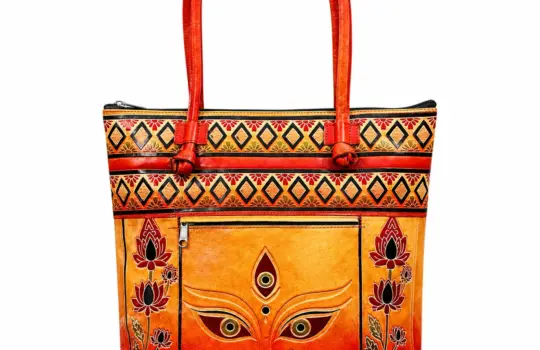
Do not apply conditioner, polish, oil or waterproofing spray to painted or decorative areas unless the product maker confirms compatibility. For handcrafted artwork, cautious spot testing is especially important. Read more in the guide to Shantiniketan leather bags.
What to avoid on genuine leather
- Machine washing or soaking the bag.
- Bleach, detergent, sanitizer, perfume or household surface cleaner.
- Direct heat from a dryer, heater or iron.
- Long exposure to harsh sunlight.
- Abrasive rubbing on stains or decorative finishes.
- Overfilling, which can strain handles, seams and closures.
- Hanging a heavily loaded bag for long periods.
How to clean the lining and hardware
Check whether the lining can be gently pulled outward without stressing the seams. Remove loose debris with a soft brush or low-suction handheld vacuum attachment, keeping it away from delicate trim. For a mark on the lining, use the least moisture possible and test first.
Wipe metal hardware with a dry, soft cloth. Avoid metal polish unless the bag maker specifically recommends it, because polish can touch and discolour nearby leather. Open and close zippers gently rather than forcing them when something is caught.
How to store a leather bag
Choose a cool, dry, ventilated shelf with enough room for the bag to stand without being crushed. Use light internal support, protect it with a breathable dust bag and keep heavy items off the top. Store chain or metal straps so they do not press against the leather surface.
Rotate frequently used bags when possible and remove the everyday load before storage. A bag stored with a laptop, bottle or other heavy items inside may lose its intended shape over time.
Care by bag type
Leather laptop and office bags
Remove the laptop, charger and documents after use. Dust the padded compartment and avoid leaving a heavy device in the bag during storage. For choosing the right size and structure, see how to choose a leather office bag for women or compare the leather laptop bag collection.
Leather totes and top-handle bags
Support the base and handles when storing. Avoid hanging the bag by its handles while it is loaded. Browse genuine leather tote bags and use each product page for its specific material and care information.
Leather sling and crossbody bags
Store adjustable straps loosely rather than folding them at the same point. Empty small pockets regularly so keys and metal objects do not press into the leather. Compare current styles in the leather sling bag collection.
Frequently asked questions
Can I clean a leather bag with water?
Avoid soaking leather. For routine care, start with a soft, dry cloth. If a suitable cleaner requires a damp cloth, use minimal moisture, follow the instructions and test a hidden area first.
How do I dry a leather bag after rain?
Blot moisture gently, empty the bag, support its shape and let it dry naturally in shade with good airflow. Do not use a hair dryer, heater or direct sunlight.
Can I store a leather bag in plastic?
Long-term storage in sealed plastic is not recommended because it limits ventilation and may trap moisture. Use a breathable fabric dust bag in a dry place.
How often should I condition genuine leather?
There is no single schedule for every leather. Climate, use and finish matter. Condition only when appropriate for the specific material, use a compatible product sparingly and follow the product maker’s guidance.
What should I do if my bag develops mould?
Move it away from other leather items, avoid aggressive home chemicals and seek professional leather-care advice—especially for extensive growth, strong odour or decorative surfaces.
For more buying and care information, visit the TANN IN leather bags for women guide.