How to Identify a Genuine Leather Bag Before Buying
When you are buying a leather bag online or in a store, no single home test can prove that it is genuine leather. The safest approach is to combine several checks: clear material information, natural surface variation, visible edges or backing, construction quality, product specifications and a seller who answers specific questions.
Quick answer: look for a clear statement of the material, inspect the grain and cut edges closely, compare several areas of the bag, read the complete specifications and ask the seller what type of leather is used. Avoid flame, scratch, chemical or water-drop tests because they can damage the finish and still give misleading results.
What “genuine leather” means
Genuine leather is made from animal hide, but the phrase does not describe one single grade, thickness or finish. Leather may be smooth, pebbled, embossed, coated, painted or finished for a particular look. Two genuine leather bags can therefore feel and look different. The useful question is not only “Is it leather?” but also “What leather, finish and construction are used in this bag?”
Seven practical checks before buying
1. Read the material description carefully
Start with the product page, label or invoice. A useful listing should identify the main outer material and distinguish it from the lining, trim and straps. Broad phrases such as “leather look,” “leatherette,” “PU leather,” “vegan leather” or “synthetic leather” normally describe alternatives rather than animal-hide leather. If the wording is unclear, ask for a direct answer before ordering.
2. Inspect the grain across more than one area
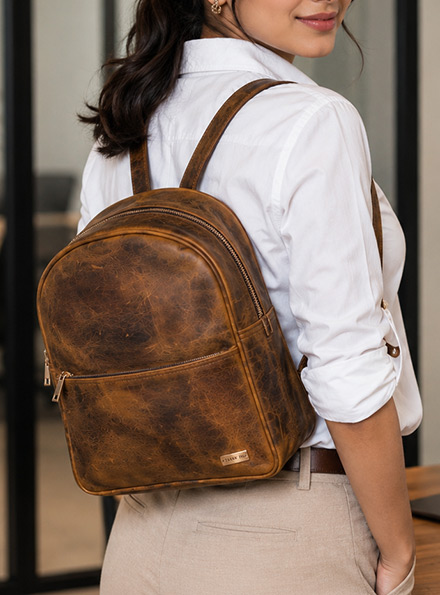
Natural leather often shows small differences in grain, pores, wrinkles or tone. Repeating, perfectly identical texture over a large area may indicate a heavily embossed surface or a synthetic material, although genuine leather can also be embossed. Check the front, back, base, handles and side panels rather than judging one photograph.
3. Look at a cut edge or the reverse side
Where construction allows, inspect an unfinished edge, stitch hole or the reverse of a leather piece. Natural leather usually has a fibrous structure beneath the surface. Synthetic sheets may show a textile backing or layered plastic appearance. Many finished bags have painted and sealed edges, so this check may not always be possible and should never involve cutting the product.
4. Compare touch and flexibility cautiously
Leather commonly warms in the hand and flexes with fine creases, while some synthetics can feel more uniform. This is only a supporting clue: coated leather may feel smooth and structured, and modern synthetic materials can imitate softness convincingly. Do not rely on touch alone.
5. Examine construction details
Material authenticity and workmanship are separate questions, but clear construction details increase buying confidence. Inspect stitching, handle attachments, edge finishing, zipper installation, lining, compartments and closure alignment. Product photographs should match the written specifications.
6. Check dimensions and useful specifications
A trustworthy buying decision needs more than a material claim. Confirm the bag’s length, height and depth, strap type, closure, compartments, colour options and intended use. For office bags, compare the laptop compartment with the device’s actual dimensions. See the guide on choosing a leather office bag for women.
7. Assess seller transparency
A seller should be able to explain the outer material, lining, dimensions, available colours and care guidance. Review the product’s own photographs rather than relying only on generic lifestyle images. Also check the published shipping, exchange and contact information before purchase.
Checks that should not be treated as proof
- Smell: leather has a characteristic smell, but finishes, storage and added fragrances can change it.
- Price: a high price does not prove authenticity, and a promotional price does not prove the opposite.
- Water drops: absorption varies by coating and finish; water can stain or mark the surface.
- Scratch tests: scratching may damage pigment or protective coating and does not provide a reliable verdict.
- Flame tests: never burn a bag or sample. It is unsafe, destructive and unnecessary.
- One close-up photo: lighting, editing and embossing can make materials look different from real life.
How to evaluate a leather bag online
Online buyers cannot inspect the bag directly, so use a repeatable checklist:
- Read the complete title, description and specifications.
- Zoom into the surface, edges, handles, seams, base and closure.
- Check whether photographs show the actual colour or only a representative styling image.
- Compare stated dimensions with a bag you already own.
- Confirm the lining, compartments and carrying options.
- Review care instructions and exchange information.
- Ask the seller to clarify any missing material or size detail before purchase.
To compare different silhouettes, visit the TANN IN leather bags for women guide, browse genuine leather tote bags, or explore classic leather bags.
Natural variation is not automatically a defect
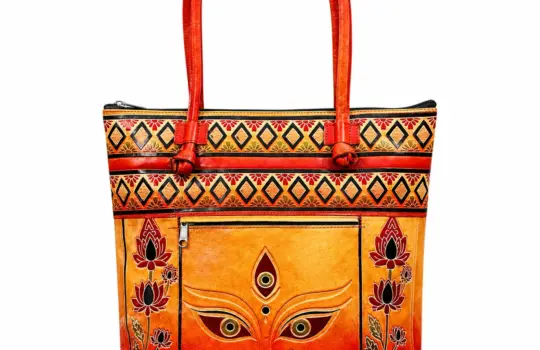
Genuine leather can vary in grain, tone and response to use. Handcrafted and painted products may also show small differences between pieces. These variations can be part of the material and making process, but they do not excuse poor stitching, damaged hardware, incorrect dimensions or a product that does not match its listing. Judge material character and workmanship separately.
Questions to ask before ordering
- What is the main outer material?
- Is any part of the exterior synthetic or textile?
- What are the exact length, height and depth?
- Which colour or variation will be supplied?
- What compartments and closures are included?
- Are the strap and handle details shown in the listing?
- What care method is recommended for this finish?
Frequently asked questions
Can genuine leather have a uniform texture?
Yes. Genuine leather may be corrected, coated or embossed, producing a more uniform appearance. Texture alone is not conclusive; combine it with material disclosure, edge or backing evidence, specifications and seller information.
Does genuine leather always absorb water?
No. Protective coatings and finishes can reduce or delay absorption. A water-drop test can stain a bag and should not be used as proof.
Is “PU leather” genuine leather?
PU leather generally refers to a polyurethane-based synthetic material. However, some products use coated or split leather with polyurethane layers, so read the complete material description and ask the seller for clarification when the wording is ambiguous.
Are natural marks proof of genuine leather?
Natural-looking variation can support an assessment, but marks can also be embossed or printed. No single visual feature proves authenticity.
How should a genuine leather bag be cared for?
Keep it away from prolonged moisture and direct heat, remove dust gently, support its shape during storage and use only compatible care products after testing a hidden area. Read the full guide on caring for a genuine leather bag in India.
Bottom line: use several non-destructive checks and buy from a seller who provides specific, consistent product information. A clear material statement, detailed specifications and transparent photographs are more useful than any single “trick” test.