What Makes Shantiniketan Leather Bags Distinctive?
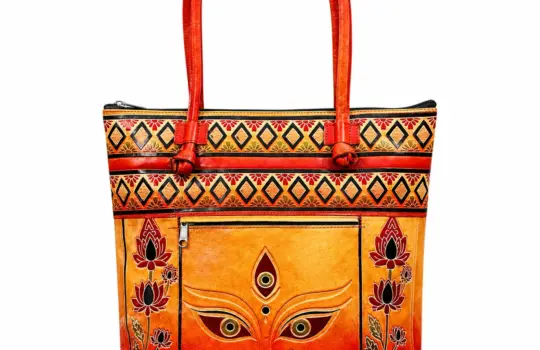
Shantiniketan leather bags are recognised for combining practical leather accessories with colourful, hand-finished decorative motifs associated with West Bengal’s craft tradition. The artwork gives each bag a more expressive visual identity than a plain leather handbag, while the shape, compartments and carrying style still determine how useful it will be every day.
Quick answer: what makes a Shantiniketan leather bag distinctive is the meeting of leather construction and decorative craftwork. Motifs, colour placement and finish may show small variations, so buyers should review the selected product images and specifications rather than expect every handcrafted piece to look mechanically identical.
What does “Shantiniketan leather bag” describe?
The term generally refers to leather bags connected with the Shantiniketan craft style of West Bengal, especially pieces decorated with colourful motifs and hand-finished surface work. Designs can appear on handbags, shoulder bags, compact sling styles and clutches.
This is a style and craft description, not a substitute for product specifications. Material, dimensions, pockets, closure and carrying options should still be confirmed on the individual product page.
Explore TANN IN’s Shantiniketan leather bag collection to compare currently available formats.
Why the artwork feels different from mass-produced prints
Handcrafted decorative work can produce subtle differences in line, colour, texture and placement. Those variations contribute to the character of the piece. They also mean that buyers should look carefully at the selected colour and product images before ordering, particularly when purchasing for a gift or matching an outfit.
A premium product page should make the buying decision factual: it should identify the material, show the bag from useful angles, state dimensions, describe compartments and closure, and explain carrying options. Decorative appeal is important, but function should remain clear.
Common Shantiniketan bag formats
Handbag and shoulder bag
A structured handbag or shoulder bag can combine statement artwork with enough room for work, shopping, travel and daily essentials. Check handle drop, closure and interior organisation to decide whether the shape suits your routine.
Sling and compact bag
A smaller hands-free style is useful when you mainly carry a phone, wallet, keys and cards. Compare the leather sling bag collection and confirm the dimensions rather than judging capacity from photographs alone.
Clutch
A clutch emphasises the artwork in a compact format for occasions, gifting and light carrying. The handcrafted leather clutch collection helps narrow the search by use case.
How to choose a Shantiniketan leather bag
1. Start with the intended use
For everyday or office use, prioritise capacity, secure closure and comfortable carrying. For occasions, a compact structured bag or clutch may be enough. For travel and busy outings, a shoulder or sling option can make hands-free movement easier.
2. Confirm the material and construction
Read the individual description for the stated leather material, lining, stitching, hardware and closure. Do not assume every product in a decorative style has identical construction.
3. Compare exact dimensions
Measure a bag you already own and compare its length, height and depth with the listed dimensions. This gives a better sense of capacity than a model photograph.
4. Review the selected artwork and colour
Check the chosen variation and all available images. Hand-finished pieces can have natural differences, and colours may appear slightly different across screens and lighting conditions.
5. Check compartments and access
Consider whether you need a zipped main compartment, interior utility pockets, a back pocket or faster access to smaller essentials. The layout matters as much as the exterior design.
A TANN IN Shantiniketan example
The Shantiniketan bag for women with motif artwork is described as handcrafted in West Bengal with ethnic artwork, two inner compartments, a back zippered compartment and double handles. Its listed dimensions are 37.1 cm long, 14.2 cm wide and 15.5 cm high, with an approximate weight of 500 g. Review the product page for the current selected design and availability.
For a broader comparison across bag types, visit the TANN IN leather bags for women guide.
How to care for decorative leather artwork
Use a soft, dry cloth for gentle surface cleaning. Avoid soaking the leather or applying an unfamiliar cleaner directly to the artwork. Keep the bag away from prolonged moisture, direct heat and extended harsh sunlight. Store it in a dry, ventilated place, lightly supported to preserve its shape.
If a care product is needed, test it cautiously on a small, hidden area and follow any instructions supplied with the bag. Abrasive rubbing can affect both leather and decorative finish. See the full genuine leather bag care guide for India for cleaning, monsoon and storage guidance.
Frequently asked questions
Are all Shantiniketan leather bags identical?
No. Hand-finished artwork can create small variations in colour, line, texture and placement. Review the selected product images and current description before buying.
Are Shantiniketan leather bags suitable for everyday use?
They can be, provided the bag’s dimensions, closure, compartments and carrying style fit your routine. Choose by function first, then select the artwork you prefer.
Can a Shantiniketan leather bag be a gift?
Yes, especially for someone who appreciates Indian craft and expressive accessories. Confirm the recipient’s preferred bag size and carrying style, and review the selected artwork before ordering.
How should I store a handcrafted leather bag?
Keep it in a dry, ventilated place away from prolonged sunlight, moisture and direct heat. Support the shape lightly, avoid overfilling and wipe gently with a soft, dry cloth.
Where can I view TANN IN Shantiniketan leather bags?
Browse the TANN IN Shantiniketan leather bag collection for the current selection, then use each product page to verify material, dimensions, construction, images and availability.